Why the best engineering partners for aerospace device design ask questions about the process.
A customer came to us with a problem: their mechanical linkage bent under load.
They’d designed it in CAD. Built the prototype. Installed it. Then watched it deform during testing.
They asked us to identify the loads and forces that hadn’t been accounted for and strengthen the linkage within the constraints of the already‑built assembly.
Space was tight. Surrounding components were already fabricated. We could only change geometry and material properties.
We ran the FEA. Redesigned the joint. Specified the material and hardening process. Delivered the recommendations with confidence.
The part failed again.
Same location. Different failure mode. Still unusable.
We went back to the FEA. Checked the math. Verified the load cases. Nothing obvious.
So we asked a simple question:
“What’s the manufacturing and installation process?”
Chad is a professional engineer and has spent over 25 years leading complex engineering projects in medical device development and defense systems. He's been hands-on from early-stage prototyping to full-scale manufacturing, giving him unique insights into the challenges of bringing devices to market. Chad is always thinking about how to improve the development process to help clients save on manufacturing costs without reducing quality.

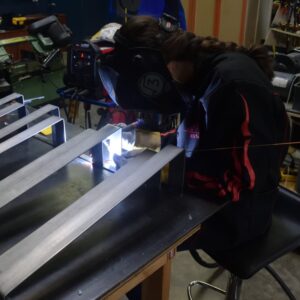
Turns out the parts were machined out of hardened steel and then welded into the frame.
Not machined → welded → heat treated.
Machined from already hardened stock → welded into place.
The welding heat destroyed the hardening. Effectively annealed the material at those joints. Made it much softer than our analysis assumed.
The material was correct. The heat treatment was correct. The sequence was wrong.
The fix: Fabricate the new part. Weld the assembly first. Then send it out for secondary heat treatment to harden the material in its final configuration.
It worked. No more failures.
What Actually Went Wrong
This wasn’t an FEA problem. It was a communication problem.
The customer was trying to keep as much work in‑house as they could. Smart cost decision. But the heat‑treatment rationale never made it from engineering to manufacturing to the welder. And the actual manufacturing process never made it back to our engineering team.
The welders probably didn’t realize the material had been hardened. Engineering didn’t realize the critical welds would happen after heat treatment.
FEA only helps if all the assumptions survive into the manufactured assembly. Here, one assumption (material hardness at installation) got killed by a process decision.
Two Lessons
- Engineering and manufacturing need to walk the whole workflow together.
Not just the CAD model or the load cases. The design rationale, fabrication sequence, assembly steps, and who does what with which process.
If you’re not sharing the downstream details with your engineering partner because you think they’re “not important,” you’re betting weeks of schedule and a pile of scrap that you’re right.
- If you can’t control the whole process, you have to control the information.
Most hardware failures aren’t mysteries. They’re gaps.
Engineering → Manufacturing → Assembly → Testing.
If any handoff drops critical context, the prototype will fail. And you won’t know why until after you’ve burned time and money chasing the wrong root cause.
Why This Matters for Aerospace Teams
When you’re evaluating engineering partners for aerospace device design, ask:
-
Do they understand your manufacturing constraints, or just your design intent?
-
Have they seen parts fail because of process sequence, not just geometry or FEA?
-
Will they ask about welding, heat treatment, and assembly order, or just hand you CAD and a stress report?
Prototype‑to‑manufacturing transitions fail when engineering and fabrication live in separate worlds. The best engineering partners for aerospace device design bridge that gap on purpose, not by accident.
The Real Value
We partnered with them by asking what happened after the part left our hands and entered the real weld shop, with real heat, real fixtures, and real humans.
That’s the difference between a design firm and an engineering partner who feels accountable for whether the hardware actually works.
If you’re working on aerospace hardware and want to sanity‑check manufacturing assumptions before your next prototype iteration, send me a note. When we have capacity, we take on a small number of focused engineering design reviews each month to look at where design intent might not survive the fabrication process.
No pitch. Just engineering.