How hardware product development teams avoid “manufacturing problems” throughout the Design Phase
A lot of “manufacturing problems” I see didn’t start on the shop floor. They started during the Hardware Design Phase.
Here’s the pattern:
- Industrial design hands off a beautiful model
- Engineering makes it “real”
- Manufacturing gets the CAD and says, “We can’t build this the way you designed it”
- Assembly says “I can’t reach in with a wrench to meet the torque spec”
- Service says “the electronics are too close to the water lines, and we’re seeing failures”
Everyone did their job. The system still failed.
Chad is a professional engineer and has spent over 25 years leading complex engineering projects in medical device development and defense systems. He's been hands-on from early-stage prototyping to full-scale manufacturing, giving him unique insights into the challenges of bringing devices to market. Chad is always thinking about how to improve the development process to help clients save on manufacturing costs without reducing quality.
When Design and Manufacturing speak different languages
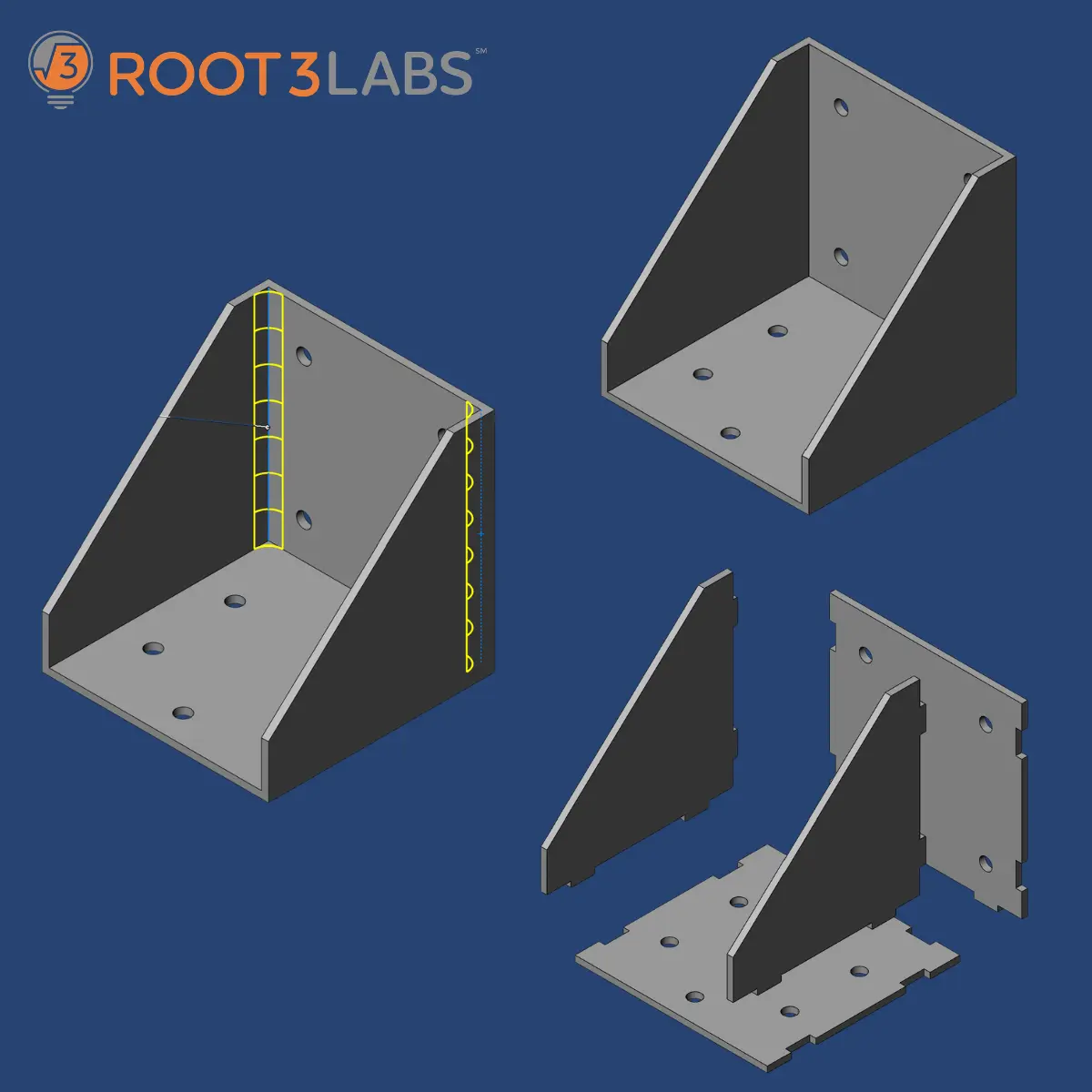
A common version: Your team designs a neat cube bracket. Strong, compact, fits the envelope.
Manufacturing comes back: “We’re not machining that from billet. We’ll cut it from plate and weld it.”
Now your “simple” part has:
- Different stiffness
- Different heat paths
- Different tolerances
- Different real-world behavior under load
Nothing is wrong with your engineers. They were just designing in one world while your manufacturer lives in another.
A focused hardware design review exists to close that gap before:
- You lock a BOM
- You send drawings to a supplier
- You commit to tooling or a test event
A startup that called before locking the story
A funded startup team brought us what looked like a finished assembly.
- Clean design
- Hit the spec sheets
- Investors loved the renders
They did the smart thing next: before freezing the design, they asked for a hardware design review.
We found:
- Two parts that really needed to be injection molded, not thermoformed
- A tolerance stack-up that effectively demanded sub‑0.005″ on most features
- A material choice that forced an unnecessarily expensive filled plastic
None of that made them “bad” engineers. They were designing for the story they had to tell today. The review made sure that same story would still work at 5,000 units.
We’ve enjoyed working with Root3 so much that we plan to continue consulting them on future projects. I would recommend Root3 to any of my colleagues who might need engineering or design assistance.
What a hardware design review actually does
Done right, it’s not a paperwork exercise. It’s a pressure test on:
- Tolerance stacks and interfaces that only work in CAD
- Material and process choices that blow up cost or yield
- Assembly, fixturing, and test steps that are fragile in the real world
The outcome isn’t a 40‑page report. It’s a short list of “change these now, or pay for them later.”
When to run a hardware design review
In my experience, the best time is just before:
- Tooling and long‑lead POs
- Supplier selection for critical parts
- Big demo / regulatory submissions
Smart teams don’t call us to save the day. They call us early so there’s nothing dramatic to save.
If you’ve got a design that’s “almost locked” and you want it to build the way it looks, reach out, and I’ll send over the scope template we use for our own hardware design reviews.