It’s more than just the machine shop lead time. It’s the iterations you never make.
Here’s something I’ve noticed after 25 years of building hardware:
Teams without in‑house prototyping don’t iterate less because they’re disciplined.
They iterate less because friction gets in the way.
When your nearest option is an external machine shop, every prototype becomes a decision.
You’re ordering aluminum or steel because that’s what they work in.
You’re waiting on quotes.
You’re committing to geometry before you’ve tested the concept.
Meanwhile, a team with a 7,500 sq ft workshop full of 3D printers, laser cutters, machining centers, and yes, even wood and cardboard materials, can ask a different question:
“What’s the fastest way to learn whether this works?”
Sometimes that’s a 3D print in ABS.
Sometimes it’s laser‑cut acrylic to check fit.
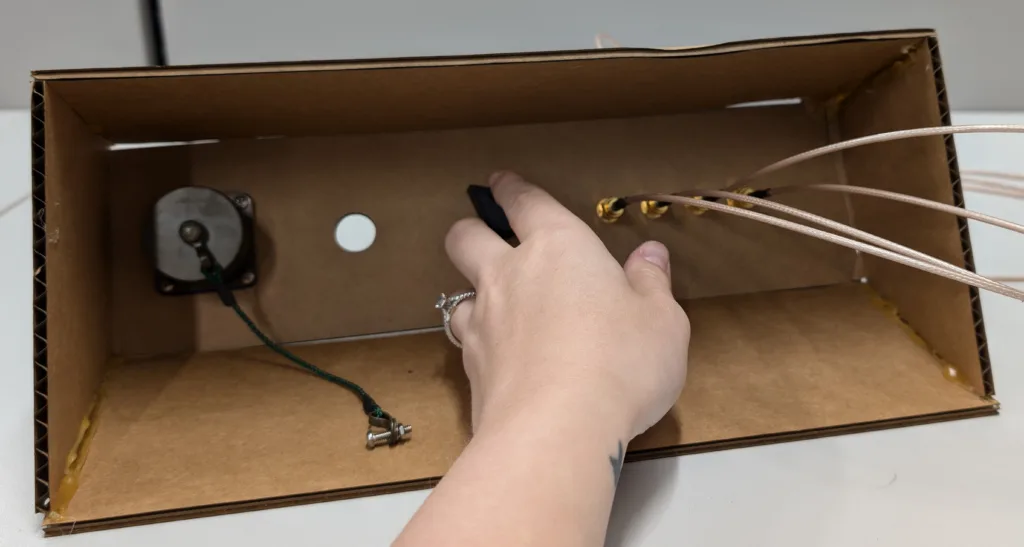
Sometimes it’s literally cardboard taped together to verify hand-clearance before anyone touches metal.
Chad is a professional engineer and has spent over 25 years leading complex engineering projects in medical device development and defense systems. He's been hands-on from early-stage prototyping to full-scale manufacturing, giving him unique insights into the challenges of bringing devices to market. Chad is always thinking about how to improve the development process to help clients save on manufacturing costs without reducing quality.
The Hidden Cost of External Prototyping
You don’t just pay for the part. You pay in hesitation. You pay by building only expensive whole prototype assemblies rather than lots of little intermediate “prototypes” that answer questions and reduce uncertainty.
- “Should we test this joint before machining?” → Skip it, we’ll find out in testing.
- “What if the clearance fit is wrong?” → Order it anyway, we’ll rework later.
- “Does this assembly sequence even work?” → We’ll figure it out on the production line.
These aren’t engineering decisions. They’re economic ones.
When every prototype costs $2,000 (or $20,000) and takes weeks to build, you make three.
When you can make ten versions in a day, you make ten.

A Typical Pattern We See
When teams rely only on external shops for prototypes, the same pattern shows up:
- First articles go straight to aluminum or steel, because “that’s what the vendor does.”
- No one makes a quick 3D print to check assembly or interference.
- No one laser-cuts spacers or simple gauges to test clearance or stack-up.
- Assembly issues only show up during formal testing, when schedule pressure is highest.
By that point, changing a feature means updating drawings, re-quoting, waiting on new parts, and re-booking test time. So instead of ten cheap experiments up front, you get one expensive failure late.
Nothing exotic. Just the predictable result of a workflow where “small, fast, and ugly” prototypes aren’t available.
What This Means for Your Team
If you’re managing hardware development, ask yourself:
- How many prototypes did we skip because they weren’t “worth” ordering?
- What materials did we commit to before testing the concept?
- Where did we assume geometry was correct instead of proving it?
- How many issues did we discover in testing that we could have found with a $20 print or cardboard mock-up?
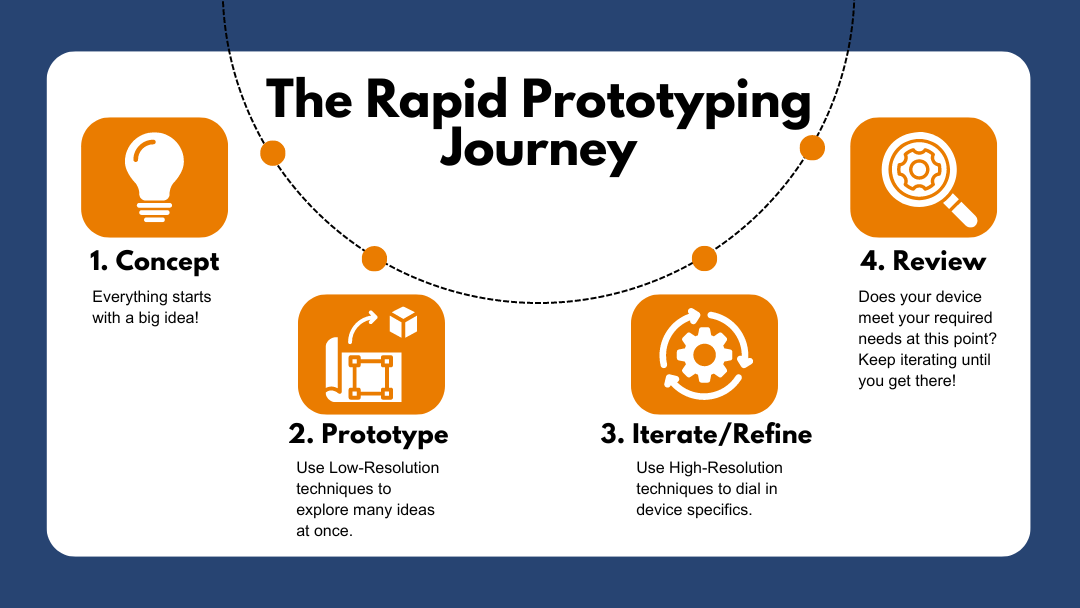
What Can You Do About It?
The teams that ship on time aren’t the ones who guess right every time. They’re the ones who can afford to learn fast.
We didn’t start with a full machine shop. We started by adding one machine at a time. A 3D printer, a used laser cutter, a desktop CNC for wood and plastic. Access to the tools and knowing how to use them quickly and easily is more important than the pedigree of the machine or the bells and whistles.
Figure out what your team is using the most and whether it needs an upgrade. Our most popular tool is the laser cutter.
It’s the fastest to go from thought > accurate parts and is typically the first thing our engineers reach for. It’s faster than 3D printing and requires almost no training or tooling setup, unlike CNC machining, but the materials and 2D nature can be limiting.
Want a Second Set of Eyes Before Your Next Milestone?
We offer short engineering design reviews focused on catching tolerance issues, material choices, and assembly risks before expensive decisions get locked in.
If you want a sanity check on your next prototype iteration before you commit to tooling, leave a comment below or send me a note and a brief description of the assembly.