You don't need another biochemist. You need an Engineering Partner.
A senior medtech executive told us recently:
“Our main challenge now is sourcing critical components for our [technology] system. Everything needs to be customized. I don’t think this is an area where you can assist – it needs very specific process knowledge and prior experience with these systems.”
We hear versions of this a lot in complex device and bioprocess development. I get it; it sounds logical.
In reality, there are two different problems hiding in that sentence: WHAT needs to be built with HOW to build it.
Your scientific team knows what the system needs to do. They’re the experts on their manufacturing process, their handling requirements, their systems for ensuring quality. That’s their domain. They might even have a PhD in the subject!
Our domain? Taking that vision and turning it into automated hardware that actually works. That means sourcing the right components, designing custom assemblies when off-the-shelf won’t cut it, making sure it’s reliable and won’t fall apart three months.
Chad is a professional engineer and has spent over 25 years leading complex engineering projects in medical device development and defense systems. He's been hands-on from early-stage prototyping to full-scale manufacturing, giving him unique insights into the challenges of bringing devices to market. Chad is always thinking about how to improve the development process to help clients save on manufacturing costs without reducing quality.
Key Considerations
-
- What to build: The Scientific Team designs the process and system requirements
- Optimizing the separation, reaction, or treatment itself: cycle times, pressures, flows, selectivity, yields. That is the domain of your biochemists, process engineers, and clinicians.
- How to build it: The Engineering Team designs and sources the hardware to perform that process
- Turning those requirements into real components and assemblies – valves, manifolds, vessels, seals, sensors, enclosures – that suppliers can actually manufacture, assemble, and qualify at scale.
- What to build: The Scientific Team designs the process and system requirements
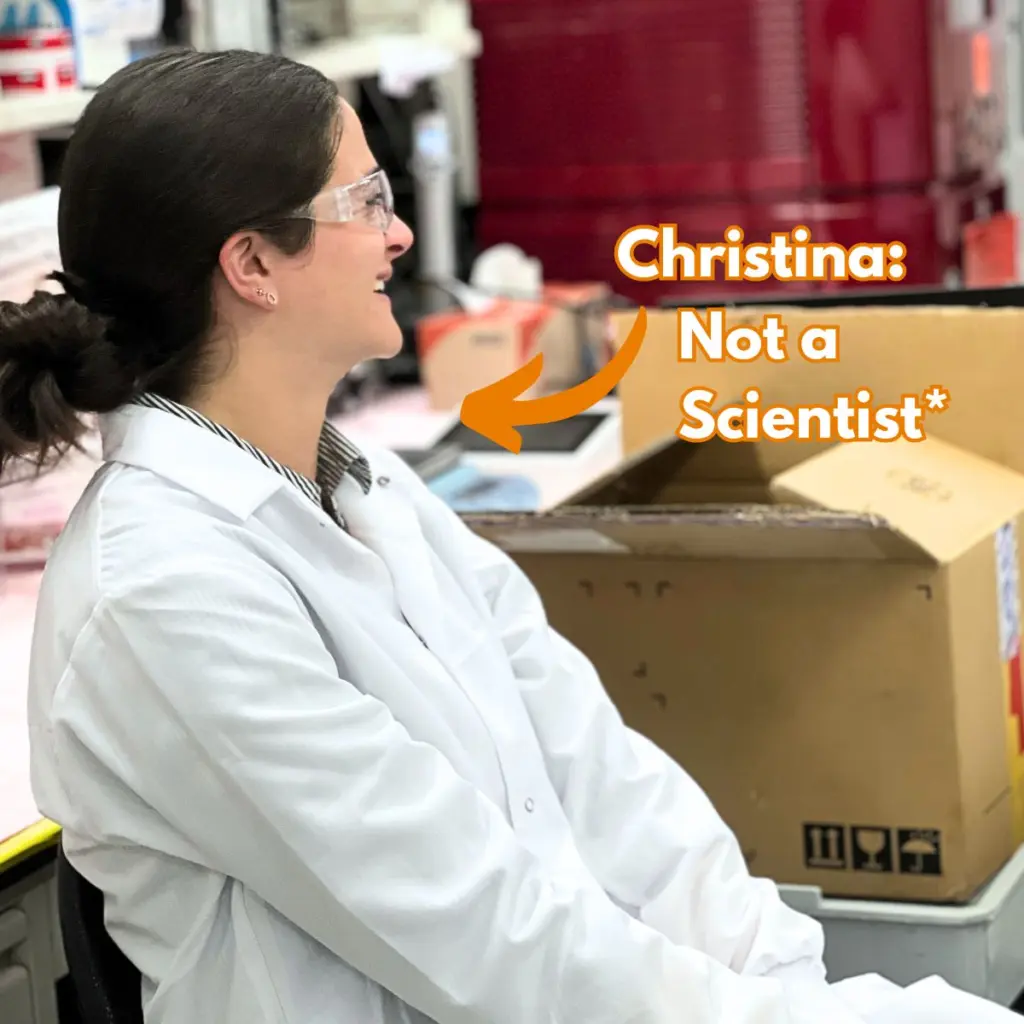
At Root3 Labs, we don’t pretend to be better biochemists, physicians, or neuroscientists than our clients. You stay the subject-matter experts on the underlying biology and process.
Where we plug in is turning that process into reliable automation hardware when off‑the‑shelf options won’t cut it.
- We design custom fluidic and mechanical components around your process constraints.
- We validate manufacturability and tolerance stacks using our in‑house prototyping workshop.
- We work directly with your suppliers so parts move from “unbuildable” drawings to production‑ready designs.
Over hundreds of projects, our team has integrated a wide range of technologies into real devices for biopharma, medtech, and life science applications – without asking our clients to stop being the experts in their science.
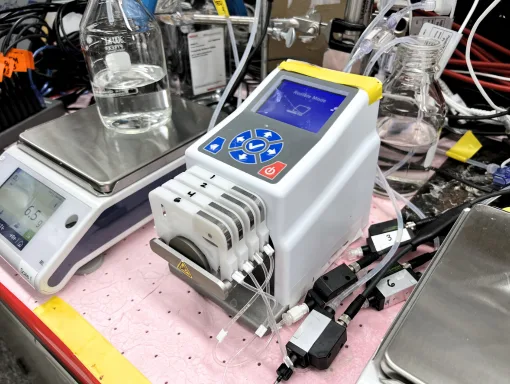
Bioprocess automation pump
Biopharmaceutical process automation eliminated scientists manually monitoring the process for 14 days!
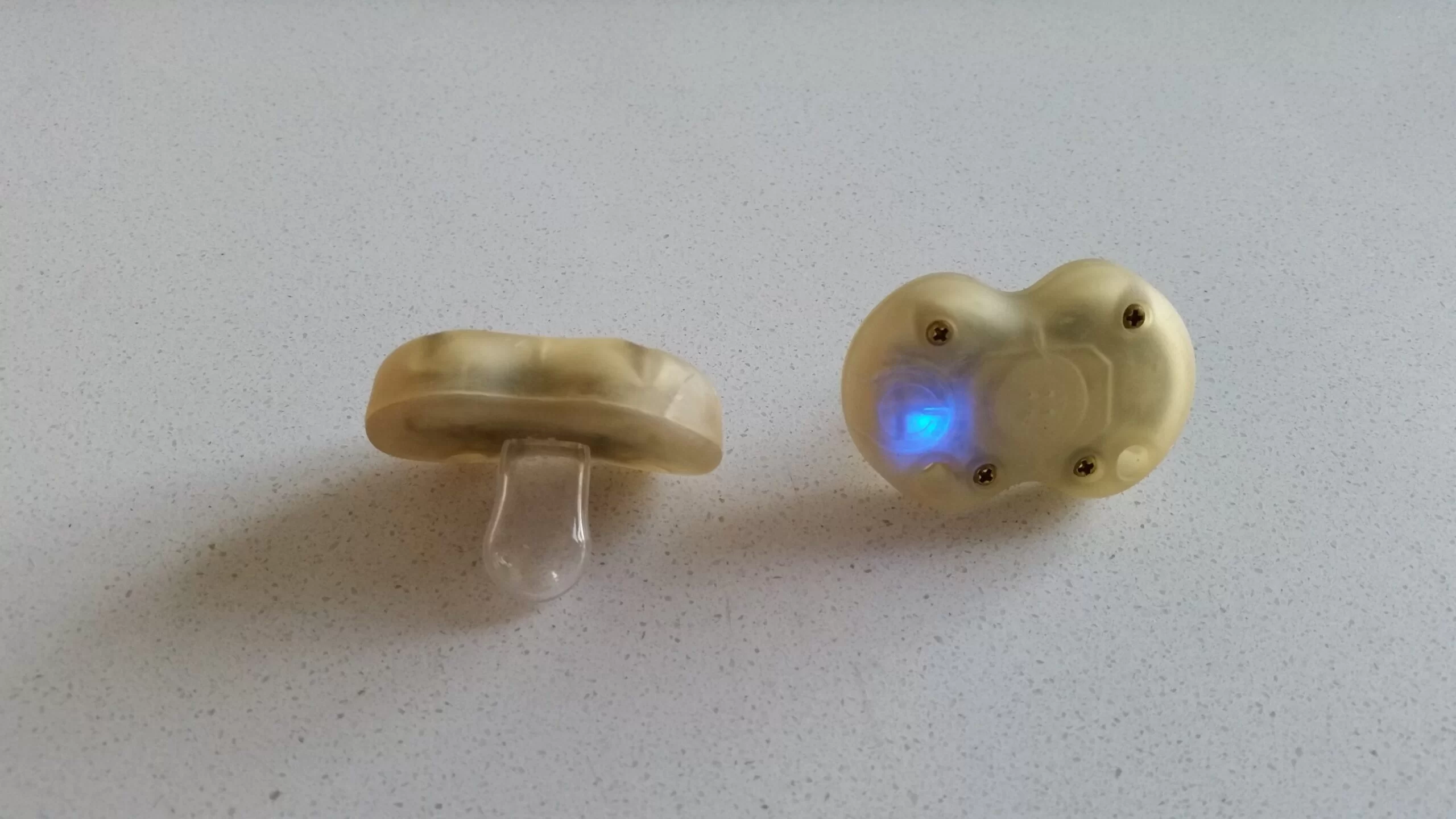
Brainchild’s Smart Pacifier
These pacifiers quantify the data for a neuroscientist to analyze the behavior of a baby 0 – 6 months old.
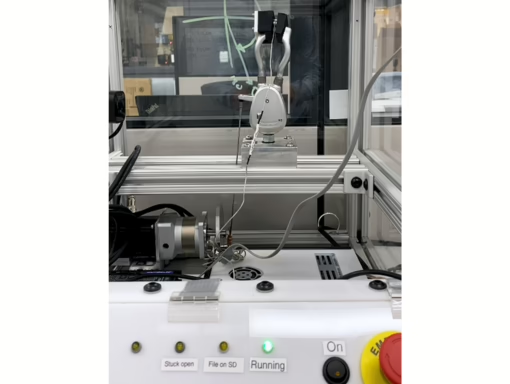
Prosthetic Durability Test Rig
The durability test rig actuates a mechanical prosthetic “hand” to ensure locking and unlocking can withstand use and abuse.
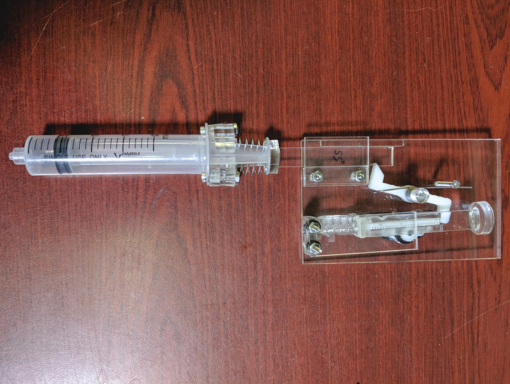
Disinfecting Dialysis Tube-sets
An injector has to travel at specific speeds to deliver the correct volumes.
BioProcess Automation
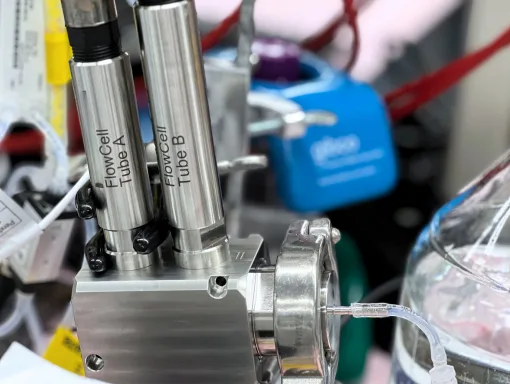
Real example: We automated a bioreactor processing system used in the scientific research of new pharmaceuticals. Our customers all had PhD’s in biochemistry but were monitoring the 14-day process 24 hours per day. Not fun! They had little idea how to automate and control a complex system of hardware. We helped them flesh out the requirements for what the system needs to do and developed the system to meet those requirements. Now the process runs unsupported, correcting for errors, and the scientists have their nights and weekends back.
Decision Framework
Uncertainty demands flexibility. The key is maintaining focus on the end goal.
Frequently Asked Questions
Q: When should we talk to an engineering partner?
A: Your subject-matter experts are not design and manufacturing engineers. While they might be able to “figure something out”, if it’s not the best use of their time, it’s better to bring in experienced partners to help.
Q: Where does an engineering partner bring the most value?
A: Your promising process works in the lab but isn’t manufacturable or robust. Engineers are great at solving problems, but you don’t need them duplicating your research. Bring them in to identify better hardware solutions for your scientific processes.
Q: We designed a system, but our suppliers told us they can’t make it. Can you help with that?
A: Yes, it’s not too late. We’ll want to understand your goals and constraints and help you figure out how to meet them while making reliable hardware solutions.
Q: Should I have a proof-of-concept prototype together before calling?
A: If you can build a basic mock-up of what you’re looking for first, that could help communicate the idea or even demonstrate how it functions. But, no, you don’t need to build it if a napkin sketch will do.
Q: What’s the biggest mistake teams make building their own hardware?
A: Spending time that isn’t effective or valuable by trying to do everything yourselves. You’ll spend a lot of time and money paying for that experience.
Ready to talk about your automation challenge?
We offer 2-hour engineering design reviews to help teams identify cost-reduction opportunities and de-risk development early. Book a discovery call or learn more about our design review service.
Let’s talk about your current challenge. We’ll point you in the right direction—even if Root3 Labs isn’t the best fit.